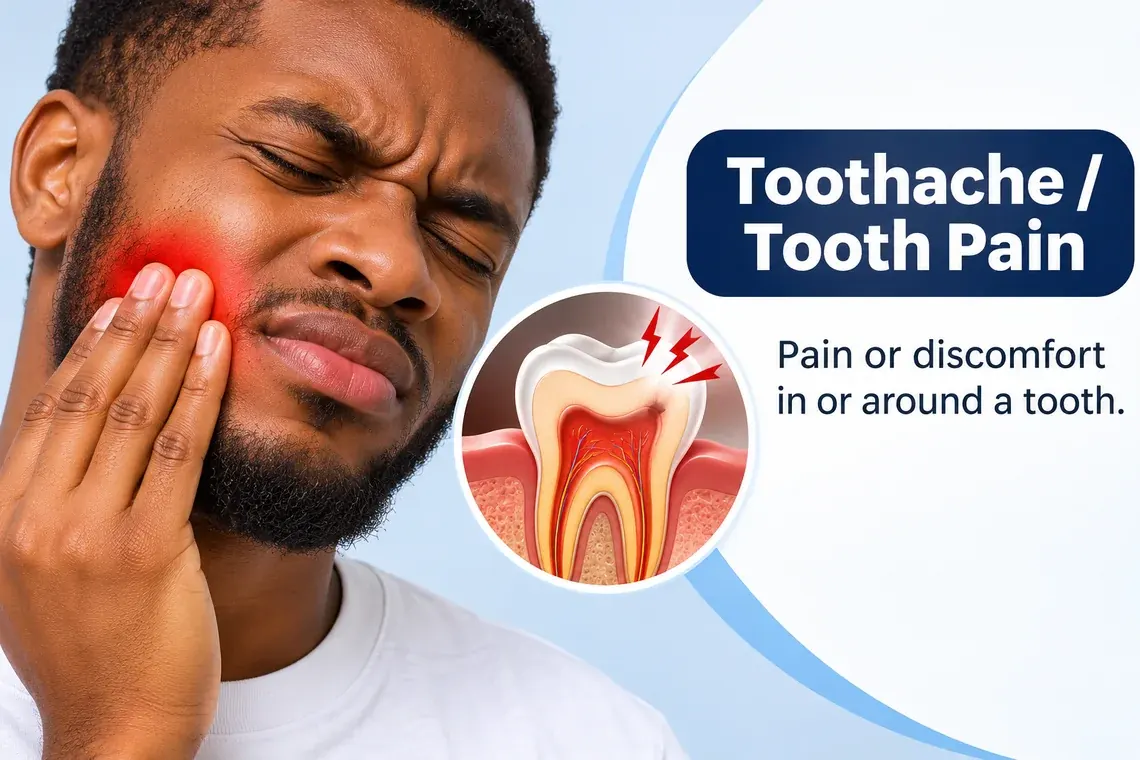
Pain usually means the nerve inside the tooth is irritated or inflamed.
A toothache is one of the most common reasons patients call us, and for good reason — it's your body's way of telling you something needs attention. While the occasional twinge can pass, persistent or worsening tooth pain almost always has a specific, treatable cause.
What's Actually Happening
Inside every tooth is a soft core containing nerves and blood vessels. When that core becomes irritated or infected — usually because decay, a crack, or a failing filling has let bacteria reach it — the nerve responds with pain that can range from a dull ache to sharp, throbbing discomfort.
Common Causes
A cavity that has reached the inner tooth, a cracked tooth, a loose or leaking old filling, gum infection around the tooth root, and even sinus pressure (which can mimic pain in the upper back teeth) are the most frequent culprits we see.
What You Can Do Right Now
Rinse gently with warm salt water, take an over-the-counter pain reliever as directed on the packaging, apply a cold compress to the outside of your cheek, and avoid very hot, cold, or sugary foods until you're seen. Avoid chewing on the affected side.
⚠️ See Us Urgently If
You notice facial swelling, a fever, difficulty swallowing or breathing, or pain that comes on suddenly and severely. These can indicate a spreading infection and need same-day attention.
How We Help
A focused exam and X-ray lets us see exactly what's causing the pain and treat it directly — whether that's a filling, a root canal to save the tooth, or, when a tooth can't be saved, an extraction.
💡 Quick Tip
Don't wait for a toothache to "go away" — pain that disappears can sometimes mean the nerve has died, not that the problem has resolved. Either way, it's worth getting checked.
References & Further Reading
This article is for general education and does not replace personalised advice from your dentist. Always consult us directly about your own symptoms or treatment.