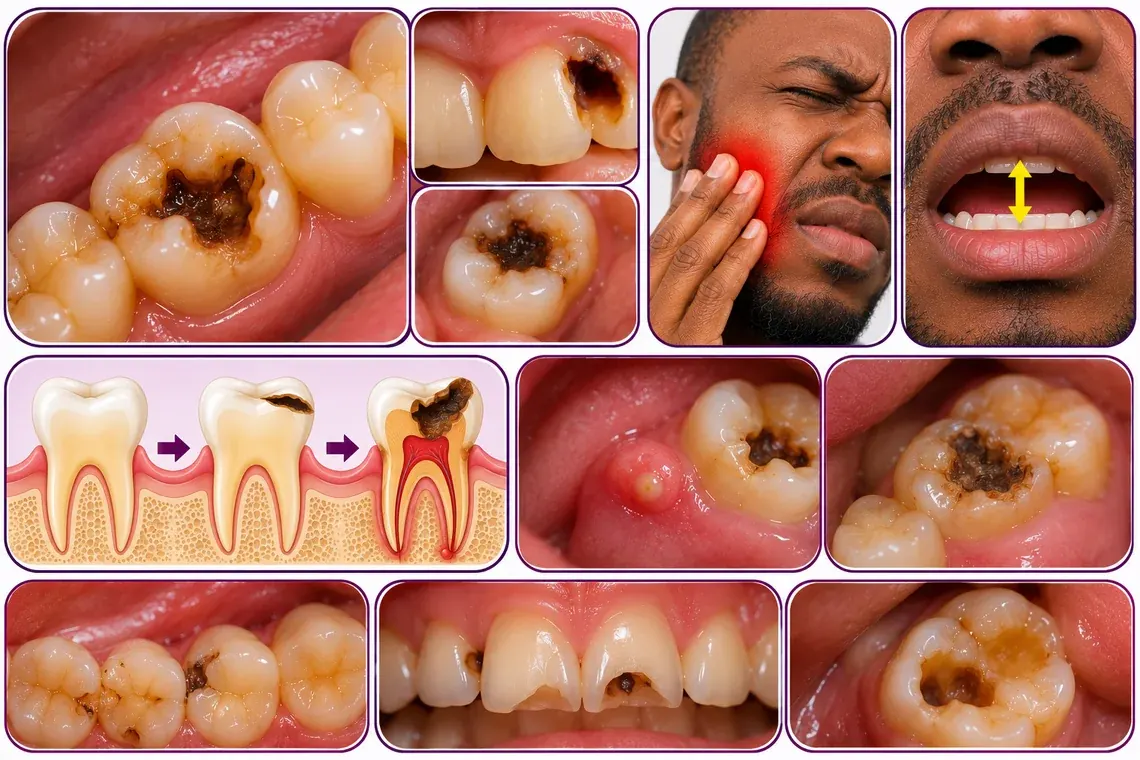
A cavity starts as a small, often invisible, weak spot in the enamel.
Tooth decay (cavities) develops gradually, which is exactly why regular checkups catch it early — long before it becomes painful or expensive to treat.
How a Cavity Forms
Bacteria in plaque feed on sugars from food and drink, producing acid as a by-product. That acid gradually dissolves minerals out of the enamel, a process called demineralisation. Left unchecked, it progresses from a faint white spot, to a visible cavity, to decay reaching the inner nerve.
Signs to Watch For
A visible dark or brown spot, a rough patch you can feel with your tongue, sensitivity to sweet or cold foods, or pain when biting down. Early decay often has no symptoms at all, which is why routine checkups matter.
What Raises the Risk
Frequent snacking (which keeps acid attacks going throughout the day), sugary or acidic drinks, inconsistent brushing, dry mouth, and deep grooves in the back teeth where plaque collects easily.
Prevention That Actually Works
Brushing twice daily with a fluoride toothpaste, flossing to clear the spaces a brush can't reach, reducing snack frequency rather than just sugar quantity, and fluoride or sealant treatments for cavity-prone teeth.
How We Treat It
A small cavity is usually treated with a simple filling in one visit. Left longer, decay reaching the nerve may need a root canal, and in advanced cases a crown to rebuild the tooth's strength.
💡 Quick Tip
It's not just how much sugar you eat but how often — sipping a sugary drink over an hour exposes your teeth to far more acid attacks than drinking it quickly with a meal.
References & Further Reading
This article is for general education and does not replace personalised advice from your dentist. Always consult us directly about your own symptoms or treatment.