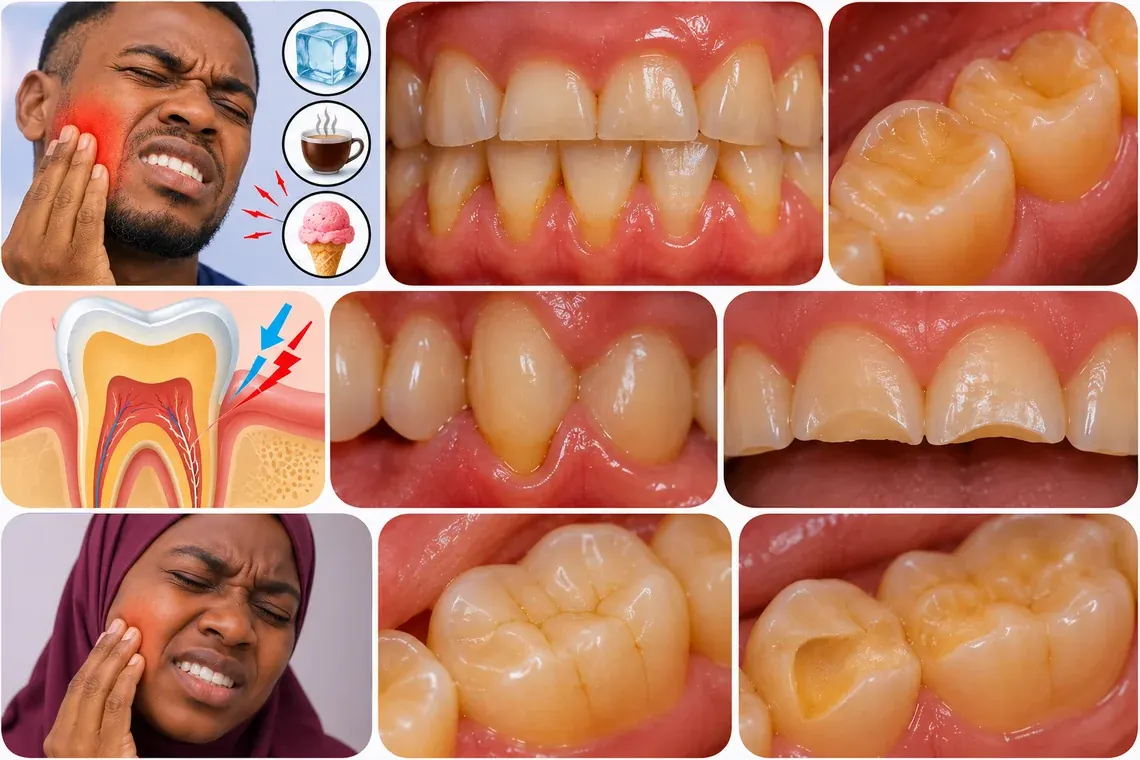
When dentin is exposed, hot, cold, and sweet stimuli can reach the nerve directly.
Tooth sensitivity is one of the most common complaints we hear, and while it's rarely an emergency, it's worth understanding the cause rather than just living with it.
What's Actually Happening
Beneath your protective enamel (and gum-covered root surface) lies a layer called dentin, which contains microscopic tubules leading directly to the nerve. When dentin becomes exposed, hot, cold, sweet, or even cold air can trigger that sharp, short-lived pain.
Common Causes of Exposed Dentin
Enamel erosion from acidic foods and drinks, gum recession exposing root surfaces, aggressive brushing technique wearing away enamel at the gumline, and teeth grinding are the most frequent culprits we see.
What Actually Helps
Desensitising toothpaste works by gradually blocking the tubules in dentin over consistent use — typically a couple of weeks for noticeable results. Switching to a soft-bristled brush and a gentler technique prevents further wear. In-office fluoride treatments can also help strengthen sensitive areas.
When Sensitivity Signals Something More
Sensitivity that's sharp, lingers well after the trigger is gone, or is localised to one specific tooth can indicate a cavity, cracked tooth, or other issue needing direct treatment rather than just desensitising toothpaste.
💡 Quick Tip
Give desensitising toothpaste consistent use for at least 2-3 weeks before judging whether it's working — it needs to build up a protective effect rather than working instantly like a painkiller.
Sensitivity is common, but you don't have to just manage around it indefinitely. If over-the-counter options aren't helping after a few weeks, let's find the specific cause together.
References & Further Reading
This article is for general education and does not replace personalised advice from your dentist. Always consult us directly about your own symptoms or treatment.