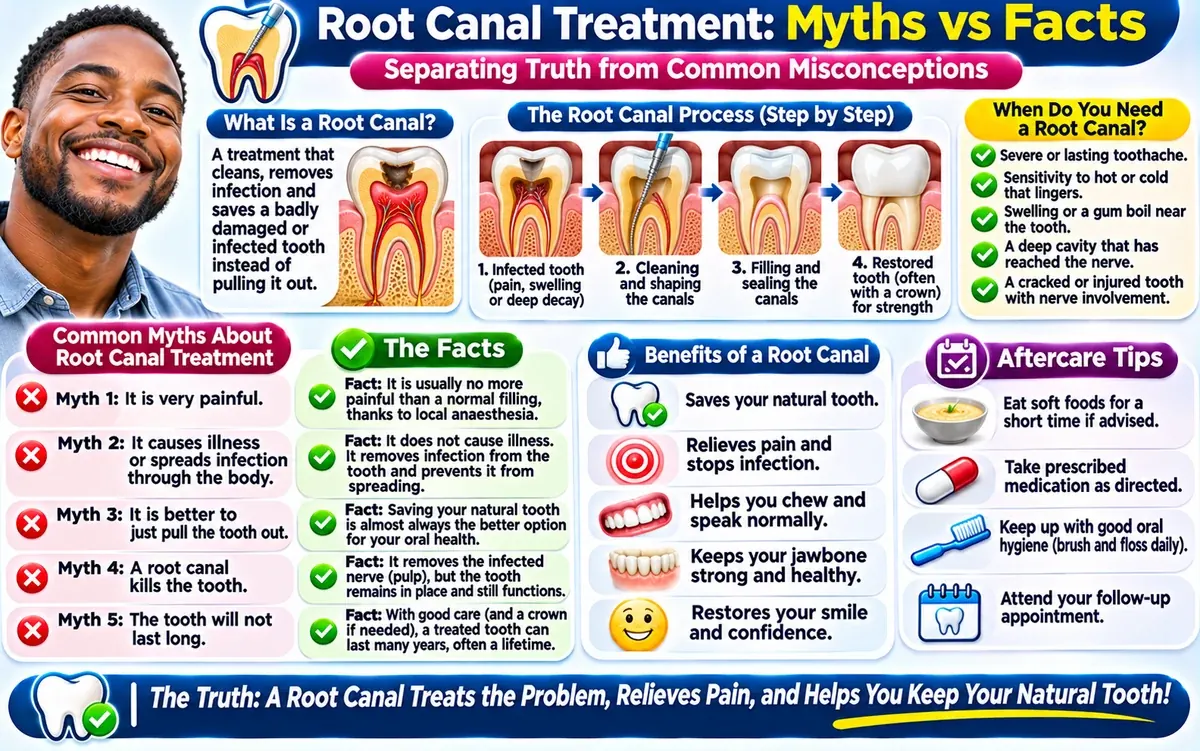
Few dental procedures carry as much undeserved fear as the root canal. The truth is that modern root canal treatment is comparable to getting a filling in terms of discomfort — it's the untreated infection beforehand that actually hurts.
Myth: Root Canals Are Extremely Painful
In reality, the procedure itself is performed under local anaesthesia and is designed specifically to relieve the pain caused by an infected or inflamed nerve — not to cause it. Most patients report the experience is no worse than having a filling placed.
Myth: It's Better to Just Extract the Tooth
Saving your natural tooth whenever possible is almost always the better long-term option. Extraction can lead to bone loss, shifting of neighbouring teeth, and the need for a more involved (and costly) replacement like an implant or bridge later.
Fact: It Addresses a Real Infection
When the pulp — the nerve and blood vessel tissue inside a tooth — becomes infected or inflamed, usually from deep decay or trauma, a root canal removes that tissue, cleans the canal thoroughly, and seals it to prevent reinfection.
What Recovery Actually Looks Like
Mild soreness for a few days afterward is normal and manageable with over-the-counter pain relief. The tooth is typically protected with a crown afterward, since root-treated teeth can become more brittle over time.
💡 Quick Tip
Don't wait for the pain to become unbearable before seeking treatment — catching an infection earlier generally means a more straightforward procedure and a better outcome for the tooth.
A root canal is a tooth-saving procedure, not something to dread. If you're experiencing persistent tooth pain, the sooner we see you, the simpler treatment is likely to be.
References & Further Reading
- American Association of Endodontists — Root Canal Facts
- American Dental Association — MouthHealthy: Root Canals
This article is for general education and does not replace personalised advice from your dentist. Always consult us directly about your own symptoms or treatment.