Dental implants have become the gold standard for replacing missing teeth, and for good reason — the long-term data behind them is some of the strongest in restorative dentistry. Here's what the evidence shows, in plain terms.
How an Implant Actually Works
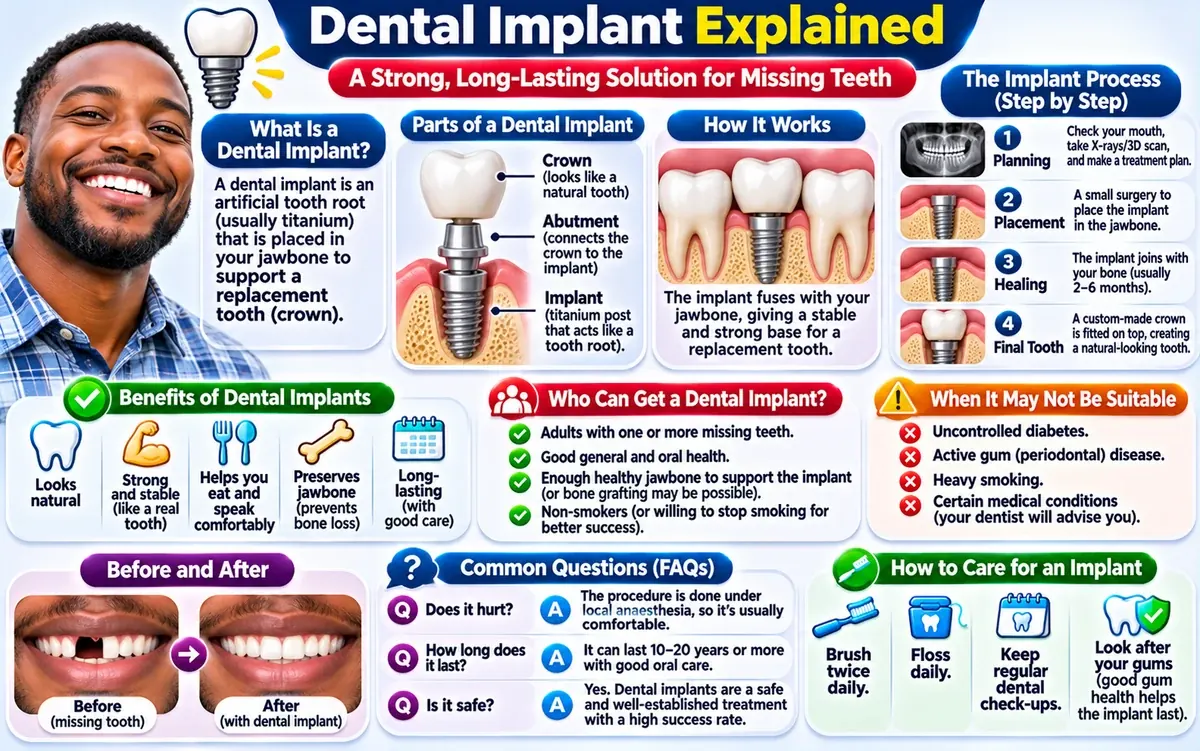
A small titanium post is placed into the jawbone, where it undergoes a process called osseointegration — the bone literally fuses to the implant surface over a few months, creating a stable foundation. A crown is then attached on top, functioning much like a natural tooth root and crown.
What the Success-Rate Data Shows
Long-term studies tracking implants over 10+ years consistently report high survival rates, generally in the 90-95%+ range under good conditions, making implants one of the more predictable procedures in modern dentistry when properly planned and maintained.
Factors That Affect Success
Adequate bone density, good overall gum health, controlled diabetes, and not smoking all improve outcomes meaningfully. Smoking in particular is associated with a notably higher implant failure rate, which is why we discuss it openly during planning.
What Recovery and Maintenance Involve
Initial healing typically takes a few months before the final crown is placed. After that, implants need the same diligent brushing, flossing, and regular checkups as natural teeth — they can develop their own form of gum inflammation (peri-implantitis) if neglected.
💡 Quick Tip
If you smoke and are considering an implant, even a temporary pause around the time of placement and healing meaningfully improves your odds of long-term success — we're happy to discuss this with you directly.
Implants aren't the right solution for every situation, but where they are, the evidence behind their long-term success is genuinely strong. We'll walk you through whether you're a good candidate during a consultation.
References & Further Reading
This article is for general education and does not replace personalised advice from your dentist. Always consult us directly about your own symptoms or treatment.