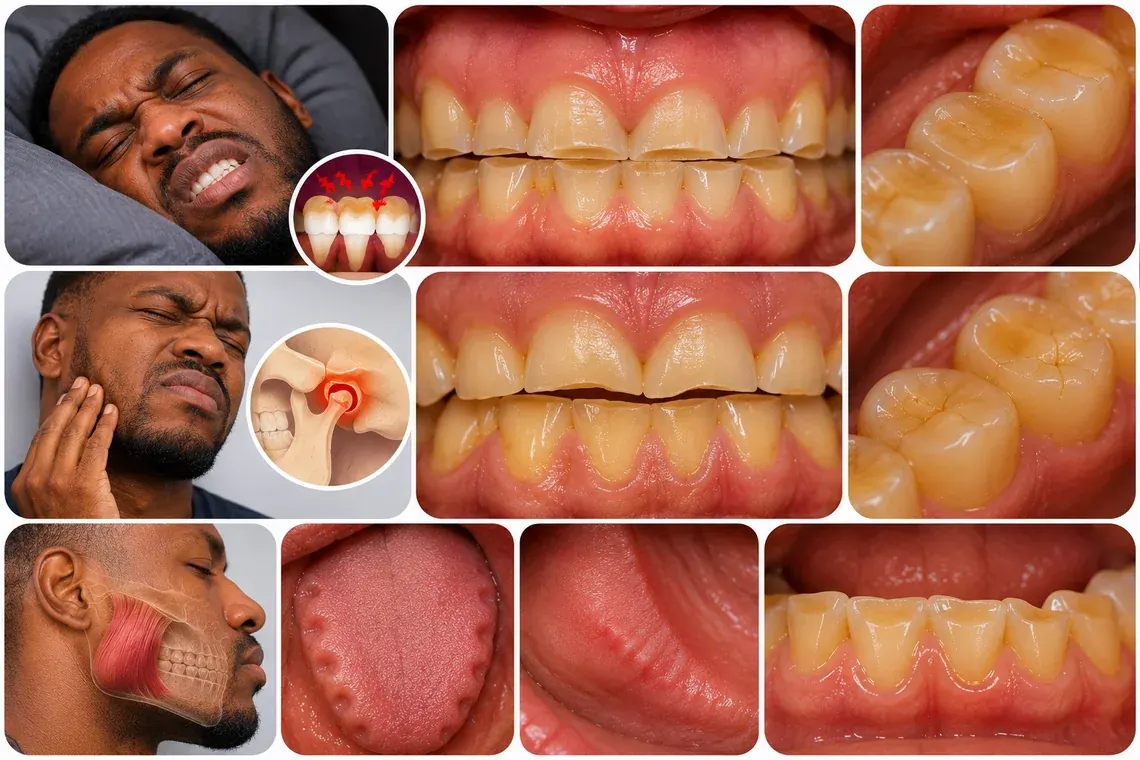
Repeated grinding gradually wears opposing tooth surfaces flat.
Bruxism — the medical term for grinding or clenching your teeth — is far more common than most people think, and many patients only discover it when we point out the wear patterns during a checkup.
Why People Grind
Stress and anxiety are the most frequently cited triggers, though bruxism is also linked to sleep disorders, certain medications, caffeine intake, and in some cases, a bite that isn't well aligned. It's rarely just one single cause.
Signs You Might Be Grinding
A dull morning headache, jaw soreness or tightness on waking, flattened or chipped tooth edges, and increased tooth sensitivity are all common signs. A partner may also notice the grinding sound itself at night.
Why It's Worth Addressing
Left unmanaged, chronic grinding can wear down enamel significantly, crack teeth or fillings, and strain the jaw joint (TMJ), sometimes leading to chronic jaw pain or clicking.
What We Can Do About It
A custom-fitted night guard is the most common and effective protective measure, cushioning your teeth from the forces of grinding. Where stress is a clear driver, we may also suggest relaxation strategies alongside protective treatment.
💡 Quick Tip
If you wake up with jaw soreness or notice new sensitivity, mention it at your next visit — we can often spot grinding-related wear before you've consciously noticed any symptoms.
Bruxism is manageable once identified. A simple night guard protects years of healthy tooth structure from unnecessary wear.
References & Further Reading
This article is for general education and does not replace personalised advice from your dentist. Always consult us directly about your own symptoms or treatment.