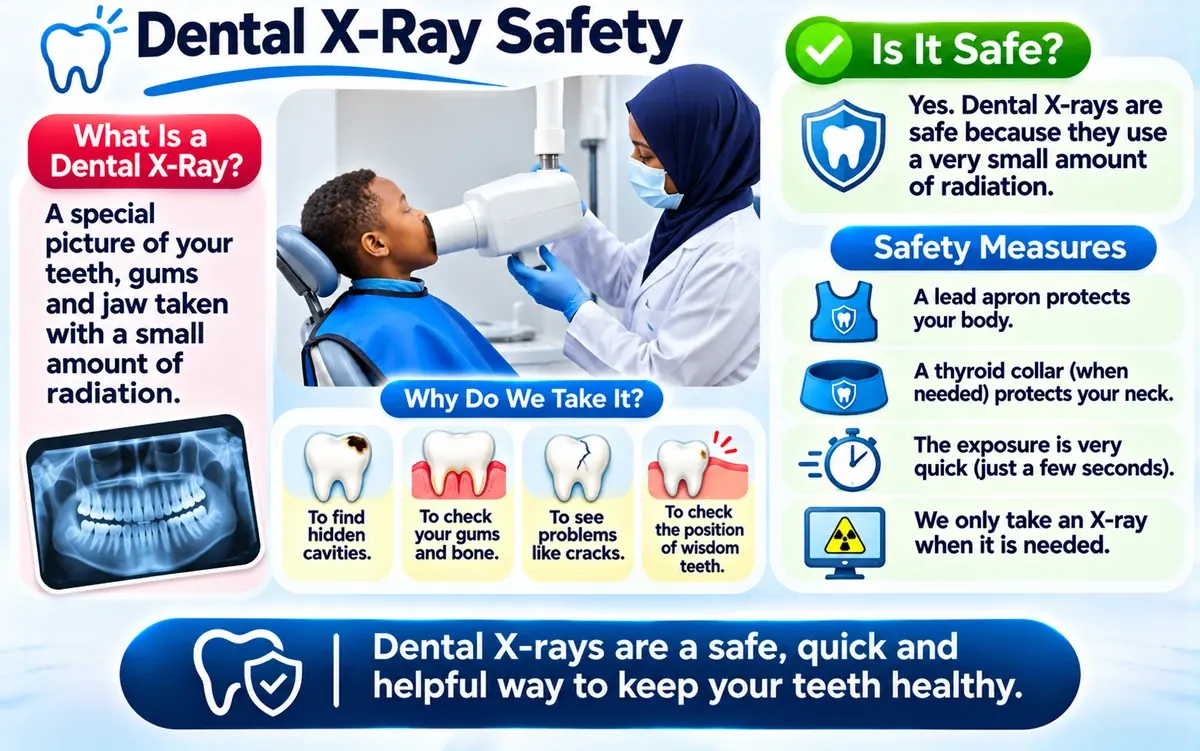
Questions about X-ray safety come up often, especially from parents and pregnant patients. It's a reasonable question, and the honest answer is that modern dental X-rays carry a very small, well-regulated radiation dose.
Putting the Dose in Context
A single digital dental X-ray delivers a radiation dose that is a small fraction of what you receive from natural background radiation over the course of just a day or two of ordinary life. Digital imaging, which we use, has also significantly reduced doses compared to older film-based X-rays.
Why We Take Them at All
X-rays reveal what's happening beneath the surface — decay between teeth, bone loss from gum disease, infections at the root tip, and the position of unerupted teeth — none of which is visible during a standard visual exam.
Safety Precautions We Take
We use lead aprons and thyroid collars as additional protection, only take X-rays when clinically necessary rather than on a fixed routine schedule, and use digital sensors specifically because they require a lower dose than traditional film.
X-Rays During Pregnancy
Necessary dental X-rays are considered safe during pregnancy with standard shielding precautions, and we're happy to postpone non-urgent imaging until after delivery if you'd prefer extra reassurance.
💡 Quick Tip
If you've had X-rays recently at another dental practice, bring them (or ask them to be forwarded) — it can save you an unnecessary repeat exposure.
We only recommend X-rays when they'll genuinely change what we can see and how we plan your care — never as a routine formality.
References & Further Reading
This article is for general education and does not replace personalised advice from your dentist. Always consult us directly about your own symptoms or treatment.