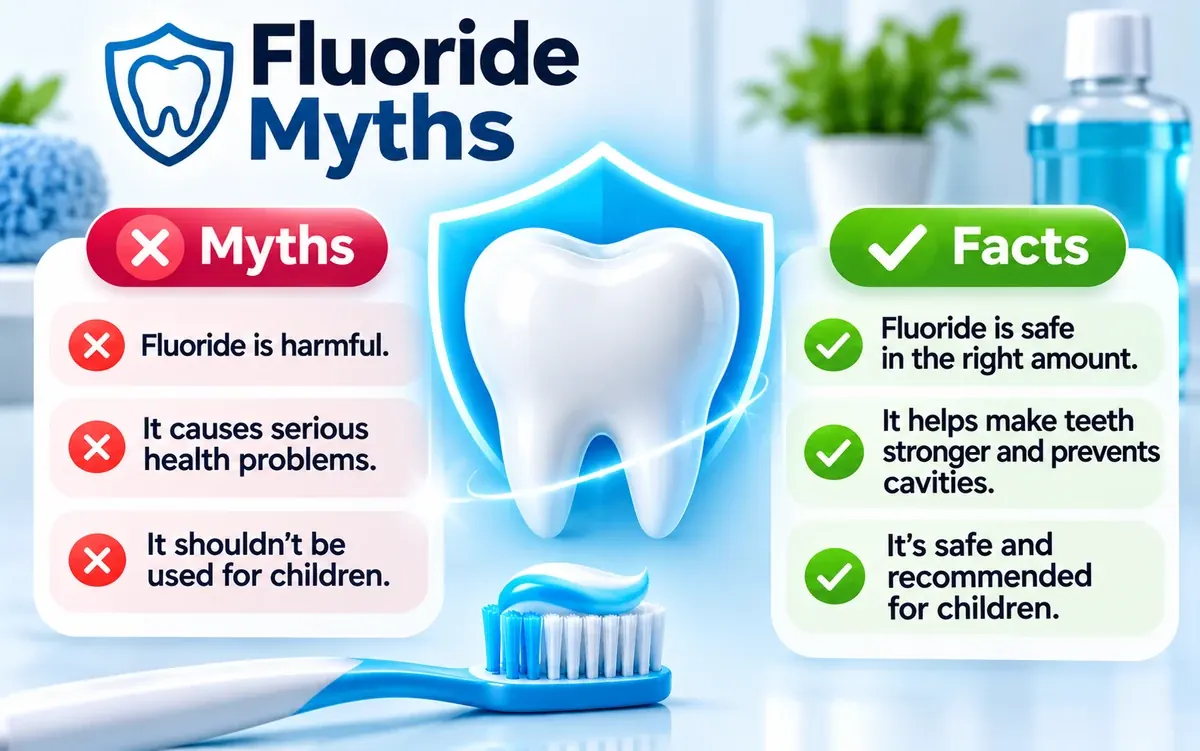
Fluoride comes up often in patient questions, usually because of something read online. It's one of the most extensively studied substances in preventive dentistry, so let's look at what the evidence actually supports.
What Fluoride Actually Does
Fluoride helps repair (remineralise) the earliest, microscopic stages of tooth decay before a cavity forms, and makes enamel more resistant to future acid attacks from plaque bacteria. It works both when you're young and teeth are forming, and throughout adulthood.
The Evidence for Community Water Fluoridation
Decades of public health data from multiple countries have shown that fluoridated water is associated with meaningfully lower rates of tooth decay across populations, which is why major health bodies continue to recommend it at carefully controlled levels.
Is Fluoride Safe at Recommended Levels?
At the levels used in toothpaste and fluoridated water, the evidence supports fluoride as safe and effective. The main known risk — fluorosis, faint white marks on teeth — is a cosmetic issue linked to excessive intake during early childhood tooth development, not a health risk from normal use.
What We Recommend
A fluoride toothpaste for daily brushing, and for patients at higher risk of decay, we may suggest an additional professional fluoride treatment during checkups. We're happy to talk through your specific risk level and what makes sense for you.
💡 Quick Tip
Children under 3 should use just a smear of fluoride toothpaste, and children 3-6 a pea-sized amount, with supervision to avoid swallowing — this keeps the benefit while minimising fluorosis risk.
Fluoride remains one of the most well-evidenced tools in preventive dentistry. If you have specific concerns, we're always glad to walk through the reasoning with you individually.
References & Further Reading
- World Health Organization — Oral Health
- U.S. CDC Division of Oral Health — Community Water Fluoridation
- Cochrane Library — Systematic reviews on fluoride and caries prevention
This article is for general education and does not replace personalised advice from your dentist. Always consult us directly about your own symptoms or treatment.