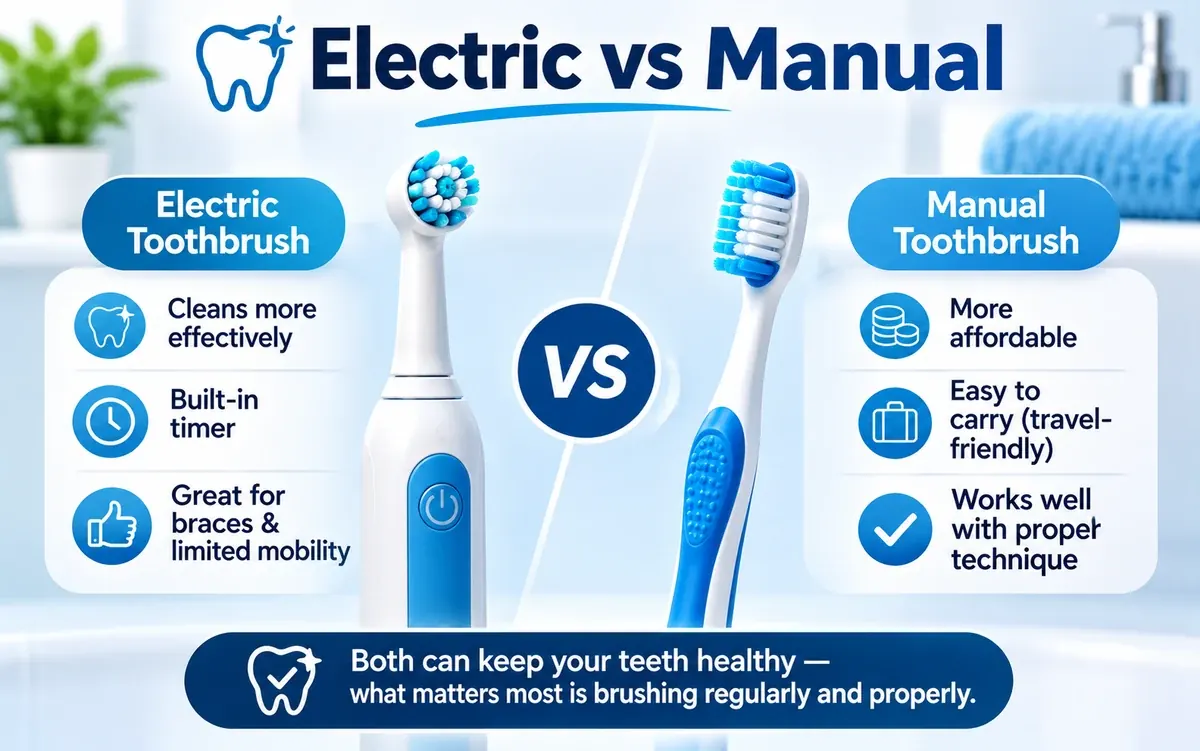
This is one of the most frequent questions we get, and it's a fair one — toothbrush aisles are full of competing claims. Here's what the actual evidence shows, beyond the marketing.
What the Research Comparisons Show
Systematic reviews comparing electric (particularly oscillating-rotating) and manual toothbrushes have found that electric brushes tend to produce a modest but consistent reduction in plaque and gum inflammation over time compared with manual brushing, when used regularly.
Why the Difference Is Modest, Not Dramatic
The gap between brush types is smaller than many expect — technique and consistency matter more than the brush itself. A manual brush used correctly for a full two minutes, twice daily, can outperform an electric brush used carelessly.
Who Benefits Most from Electric Brushes
Patients with limited manual dexterity — including some older adults, people with certain motor conditions, and children learning technique — often see the clearest benefit, since the brush does more of the mechanical work.
Our Honest Recommendation
Either option works well as part of a consistent routine. If you're motivated to brush thoroughly for two minutes with good technique, a manual brush serves you perfectly well — an electric brush is a helpful tool, not a requirement.
💡 Quick Tip
Whichever you choose, a soft-bristled brush is almost always the better choice over medium or hard bristles, which can wear enamel and irritate gums over time without cleaning any more effectively.
The best toothbrush is ultimately the one you'll actually use properly, twice a day, every day. Let's talk about what fits your routine at your next visit.
References & Further Reading
- Cochrane Library — Powered versus manual toothbrushing for oral health
- American Dental Association — MouthHealthy: Toothbrushes
This article is for general education and does not replace personalised advice from your dentist. Always consult us directly about your own symptoms or treatment.