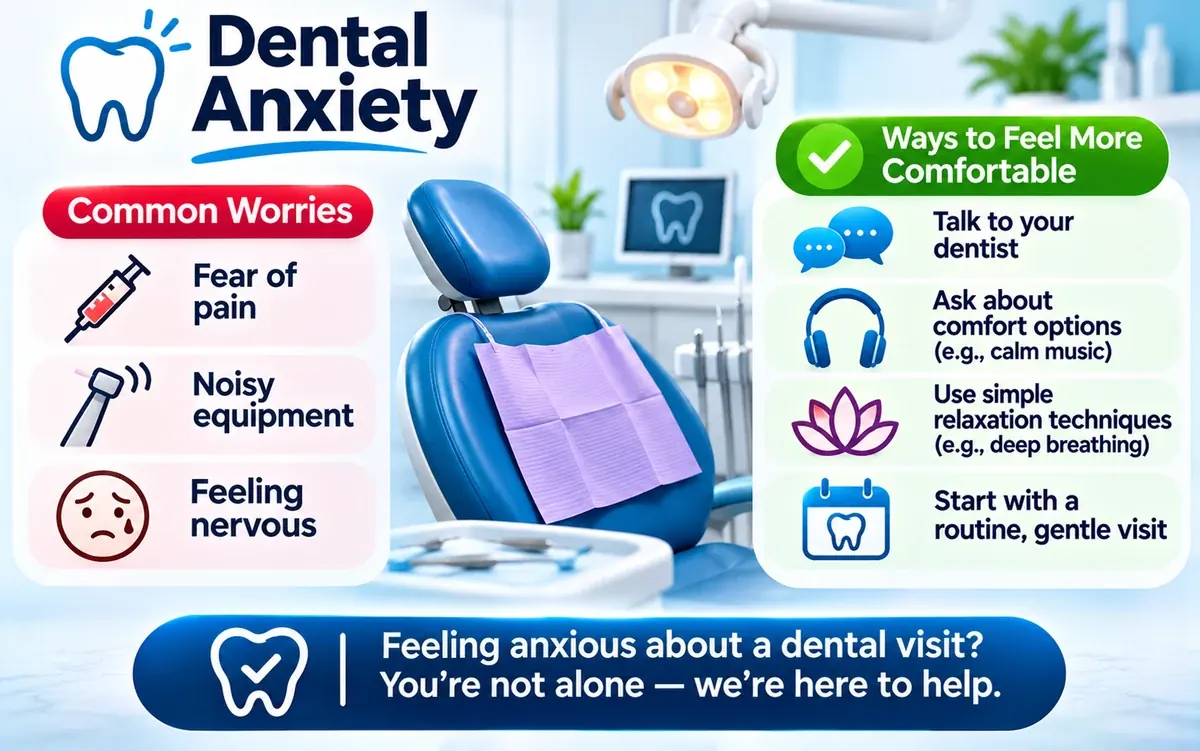
Dental anxiety is genuinely common, and it ranges from mild nervousness to a real fear that keeps people away from care entirely. We take it seriously, because avoided visits tend to lead to bigger problems down the line.
You're Far From Alone
Surveys consistently find that a substantial share of adults report some degree of dental anxiety, with a smaller but meaningful portion experiencing dental phobia severe enough to avoid care altogether. It's one of the most common healthcare-related fears.
Where the Fear Often Comes From
Past uncomfortable experiences, a general fear of pain or loss of control, embarrassment about the state of one's teeth, or even just the clinical sounds and smells can all contribute. Understanding your specific trigger helps us address it directly.
Practical Techniques That Help
Simple strategies make a real difference: agreeing on a hand signal to pause at any time, having each step explained before it happens, booking morning appointments to avoid a full day of dread, and bringing headphones to listen to music during treatment.
How We Adjust Our Approach
We slow down, explain everything in plain language before we do it, and never proceed without your go-ahead. For patients who need it, we can also discuss sedation options for more involved treatment.
💡 Quick Tip
Tell us about your anxiety before we even start — even a short conversation beforehand lets us adjust pacing, explanations, and breaks to suit you specifically.
Avoiding the dentist because of anxiety usually makes the eventual visit harder, not easier. Let's talk about what would make your next visit more comfortable.
References & Further Reading
This article is for general education and does not replace personalised advice from your dentist. Always consult us directly about your own symptoms or treatment.